

In a world that moves quickly and speaks loudly about who we should be, there’s something quietly powerful about learning to listen to ourselves again. That’s exactly where the work of Emma Boardman begins.
With a thoughtful approach that blends clarity, instinct and personal responsibility, Emma encourages people to step away from the constant noise of expectation and return to something far more reliable: their own judgement.
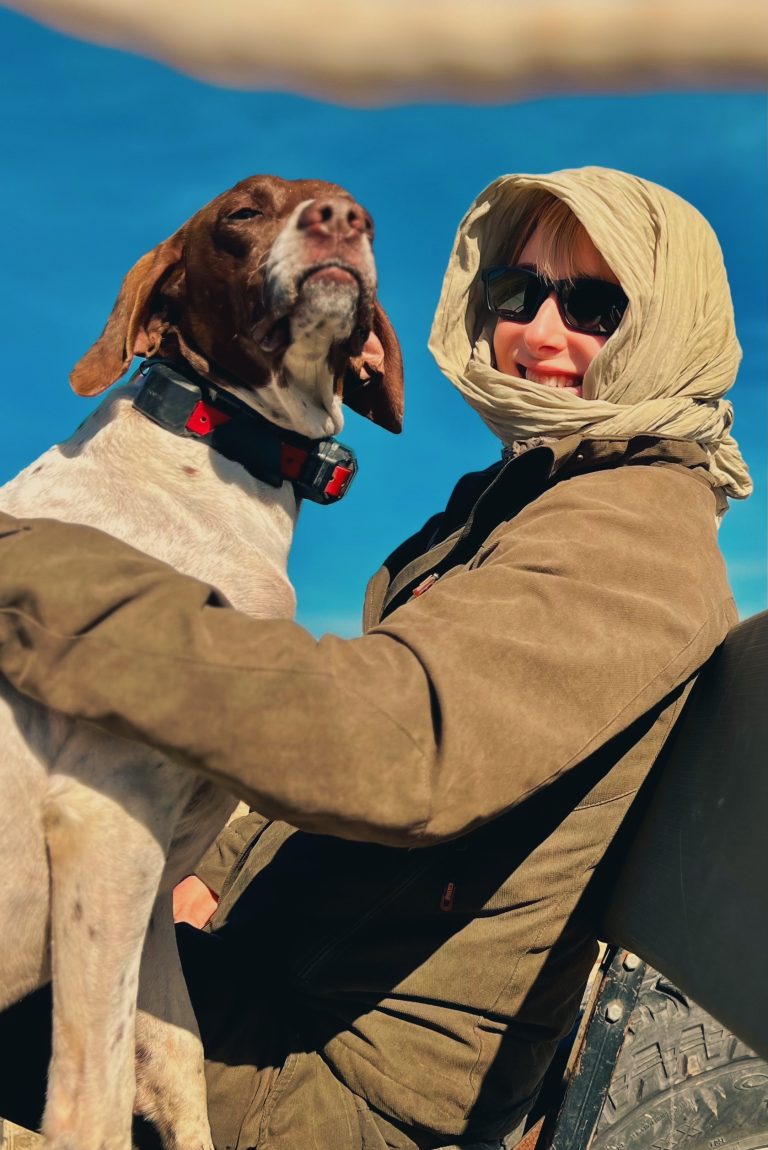
Emma has recently stepped into the world of hunting and re-connected to her early life in the countryside.
In this conversation for STILE Stories, Emma shares the thinking behind her work, the importance of reclaiming our attention in an increasingly distracted world, and why trusting ourselves might be the most radical act of all.
You have a lot of strings to your bow, could you describe to our readers what your mission is with your work?
At the heart of all my work is a very clear mission: to help people come back into the right relationship with themselves – their instincts, their attention, and their power to choose.
We’re living in a world that is relentlessly loud and instructive. Everyone has an opinion on who you should be, what you should want, and how fast you should be moving. My work creates a counter-space. A place where people can slow down, listen more accurately, and make decisions from alignment rather than performance.
I’m not interested in hustle, spectacle, or surface-level empowerment. I’m interested in precision – in how we direct our energy, what we say yes to, and what we stop apologising for. When people learn to trust themselves again, confidence stops being something you perform. It becomes something you stand on.
In a world where we all appear to be connected digitally, what do you feel is the importance of real-life interaction?
Digital connection is useful — but it’s incomplete. It can transmit information, but it can’t transmit regulation, trust, or presence in the same way a shared physical space can.
Real-life interaction allows us to read what isn’t being said: breath, tone, timing, nervous systems. It’s where empathy becomes embodied rather than conceptual. You can’t shortcut that through a screen.
In a hyperconnected world, being in the same place, at the same pace, with real human contact has become quietly radical. It’s where perspective softens, conversations deepen, and people remember how to listen — not just respond.
For me, real-life interaction isn’t nostalgic. It’s essential infrastructure for being well, thinking clearly, and living intelligently in the modern world.
You speak of living authentically and remembering who we are beneath all the noise – do you think social media has impacted our view of ourselves?
Social media has absolutely impacted how we see ourselves — especially if we’re not paying attention to what we’re consuming. It can be intimidating, dangerously distracting, and it can quietly pull you away from yourself if you’re following the wrong things.
I’m very deliberate about how I use it. I don’t follow accounts that make me feel bad about myself or take me out of my centre. I’ve learned what my own balanced, grounded state feels like, and anything that consistently pulls me away from that simply isn’t for me.
Used consciously, digital tools can be incredibly supportive. I curate my feeds around curiosity, learning, and depth — and because of that, I discover brilliant people and ideas I’d never otherwise encounter. It becomes a place of expansion rather than comparison.
So for me, living “authentically” isn’t about constant visibility or self- expression. It’s about staying steady in yourself beneath the noise. When that’s in place, social media can support connection and insight. When it’s not, it will distort your sense of self very quickly.
I think the key is remembering that you’re allowed to be the boss of your attention. Social media doesn’t have to lead — you do.
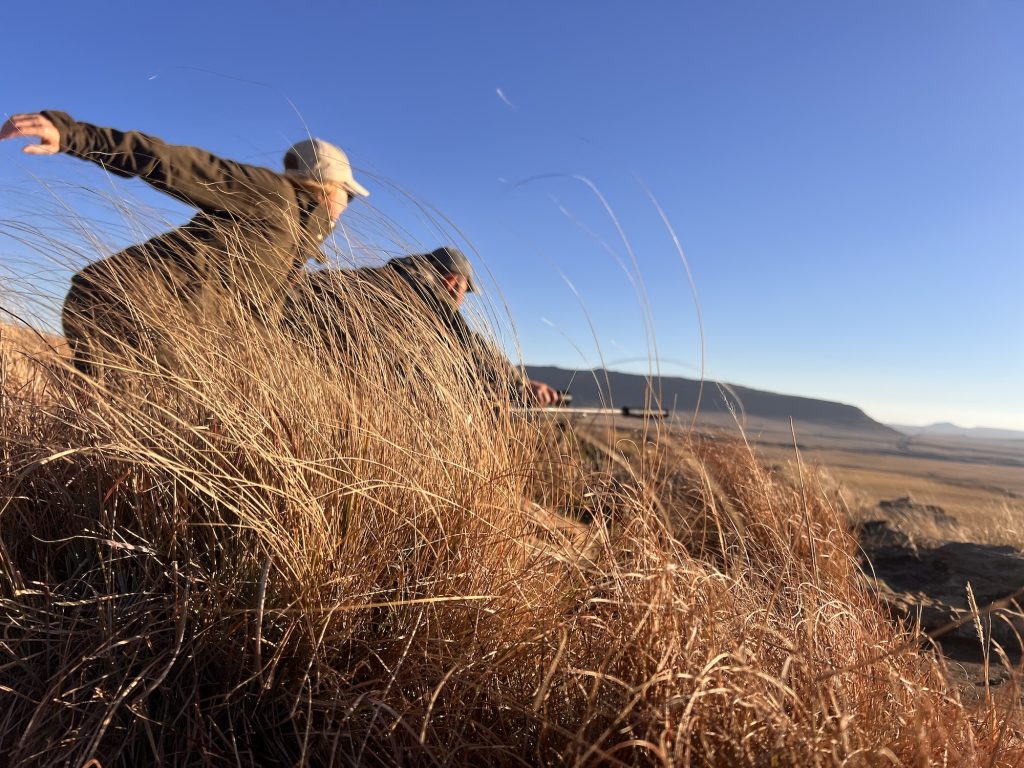
Could you tell us a bit more about your connections to the countryside and hunting?
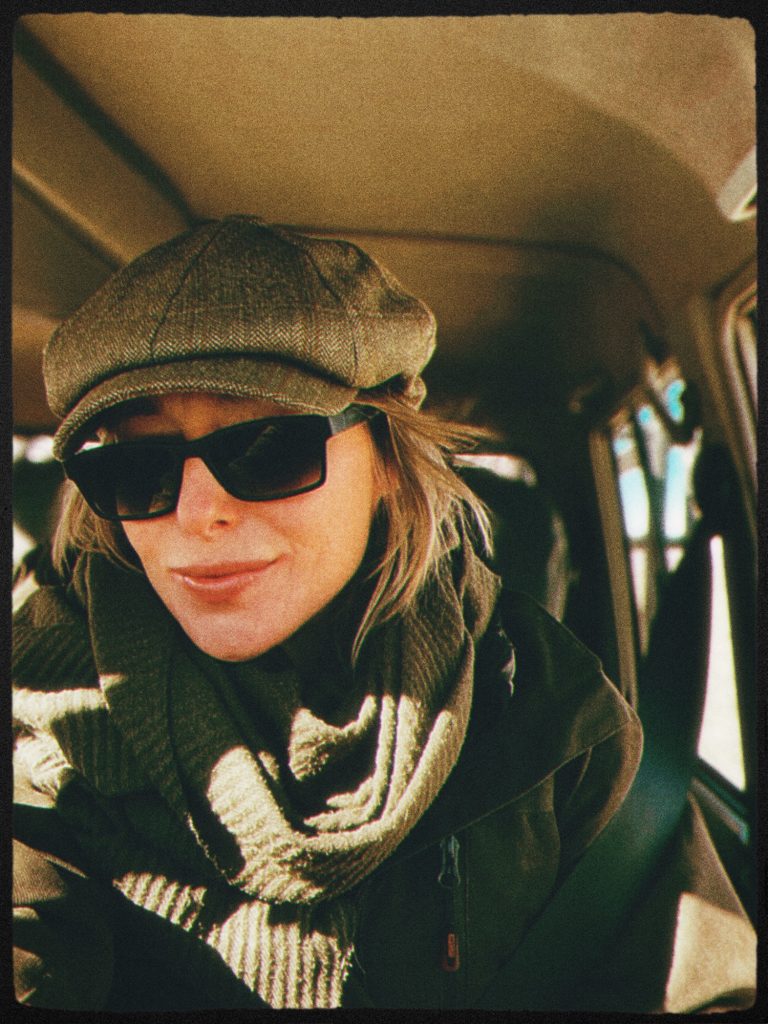
I was brought up in the countryside in Dorset, so my relationship with the land started early. My grandfather lived nearby and led the hunt for the New Forest. As a little girl, I would sometimes go with him and sit in the front of his camper van while he led the way and the rest followed. I remember the quiet anticipation of those mornings, the sense of movement and purpose, and the comfort of sitting beside him as the countryside unfolded ahead. His house was full of hunting memorabilia, and those days stay with me as memories of closeness and belonging rather than participation. That was the extent of my involvement back then.
Much later in life, I met my second husband, who is deeply connected to the countryside and to hunting through his work. For a long time, I stayed on the outside of that world. I’d been told it could damage my career, and I listened to those voices. In hindsight, that distance was also creating a quiet separation between us.
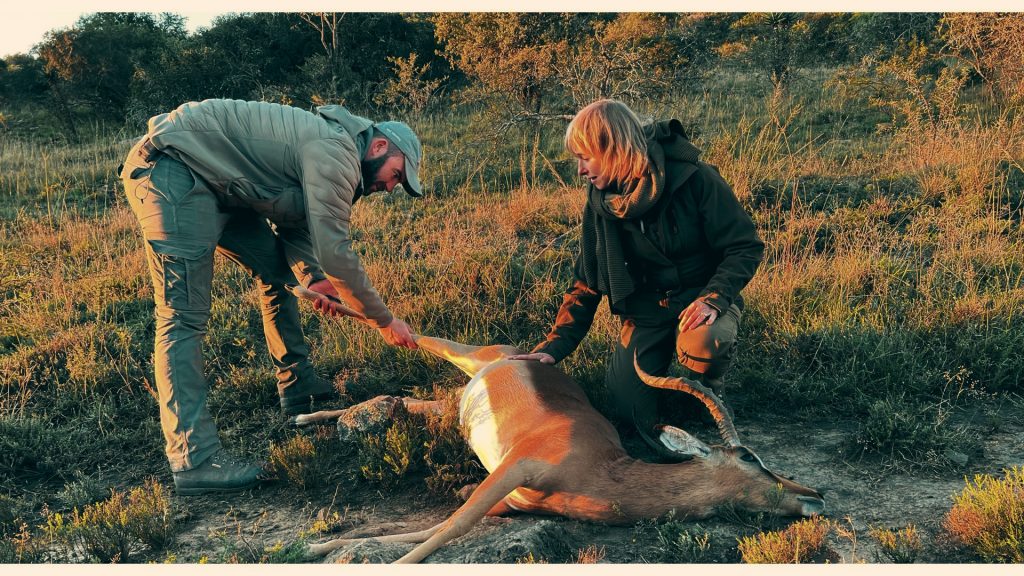
Eventually, I stepped in — not to prove anything, but out of curiosity. What surprised me most was how the experience felt. It was far calmer and more grounding than I’d expected. Rather than taking anything away from me, it opened something up. It created a sense of capability,presence, and inner space I didn’t know I had.
That connection has only deepened my respect for the land and for the responsibility that comes with it — and, unexpectedly, it has amplified me rather than diminished me.
Can you share a bit more information about the Diana Retreats?
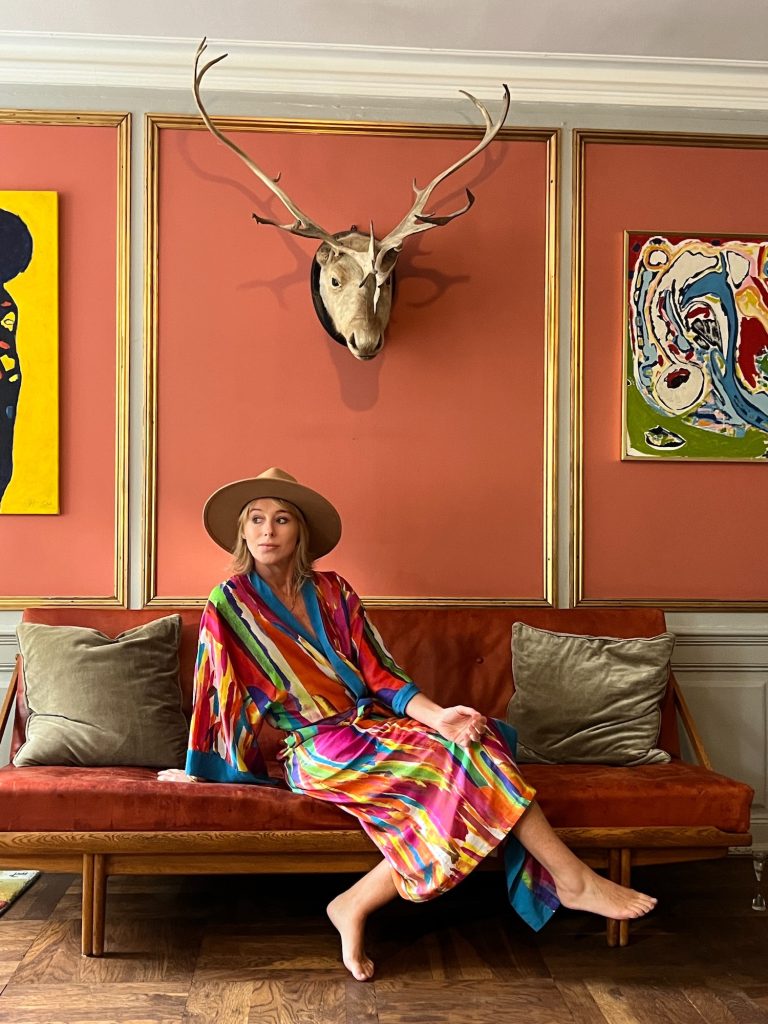
The Diana Retreats are emerging from lived experience rather than a fully formed plan. I stepped into the hunting world relatively recently, and what struck me almost immediately was the number of women who were physically close to it — wives, partners, and daughters — but they were not truly invited into it themselves.
I met women living on extraordinary estates, where hunting is part of the family livelihood, who had never been encouraged to try it. Many had spent years supporting from the sidelines — cooking, hosting, organising — without ever being asked if they were curious about what it might feel like in their own bodies. Having only just stepped into this world myself, I could feel how profoundly something had shifted inside me — a sense of capability, clarity, and self-trust I hadn’t expected. That stayed with me.
At the same time, I began to recognise something broader happening in my own life. What’s working now isn’t reinvention — it’s integration. All the different layers of me, all the skills I’ve cultivated over the years, and all the worlds I’ve moved through are finally coming into play together.
I’ve been creating thoughtful, high-touch experiences for clients for a long time. Through House of Pursuit, that experience-making is simply meeting a different landscape. What’s new is the perspective I bring to it. I’ve been on hunts where everything felt very male-oriented, and I found myself quietly noting how differently I would design the experience for women — the pacing, the atmosphere, the touch-points, and the way people are held.
That’s what this is. It’s me doing what I’ve always done, but in a new environment, with a softer, feminine point of view — attentive to detail, comfort, rhythm, and emotional safety as much as technical excellence.
The Diana Retreats are being shaped slowly and carefully, in collaboration with my husband’s expertise and our wider work under House of Pursuit. The intention is to offer women a considered, respectful entry point into the countryside, shooting, and — where appropriate — hunting, with choice, agency, and care at the centre.
Nothing about it is about proving anything. It’s about designing experiences that allow something quietly transformative to unfold — in a landscape that asks for presence, responsibility, and respect.
Visit Emma’s website to find out more about her work