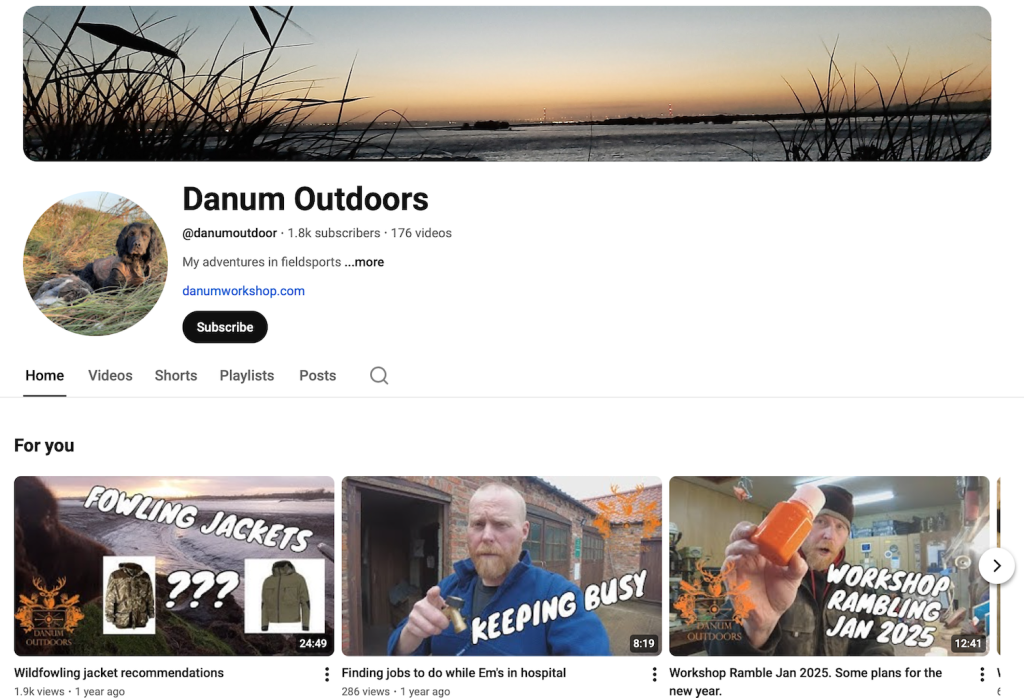

Alan is a Yorkshire-based craftsman whose work is rooted firmly in rural life and fieldsports. Based in South Yorkshire, he produces handmade knives that focus on function, durability, and a clean, honest finish.
Danum Blades began, unexpectedly, with a magazine article on making a bushcraft knife. What started as simple curiosity soon turned into evenings spent experimenting, learning through trial and error, and gradually building both skill and confidence. Early knives were made with basic equipment and given away to friends and family, before small improvements in tools and technique allowed the work to develop further.
Alan’s workshop has become the heart of his work – shaped by a steady, practical progression and a continued drive to refine each stage of the process, from blade to handle to sheath.
Let’s find out more…
What is your favourite part of knifemaking?
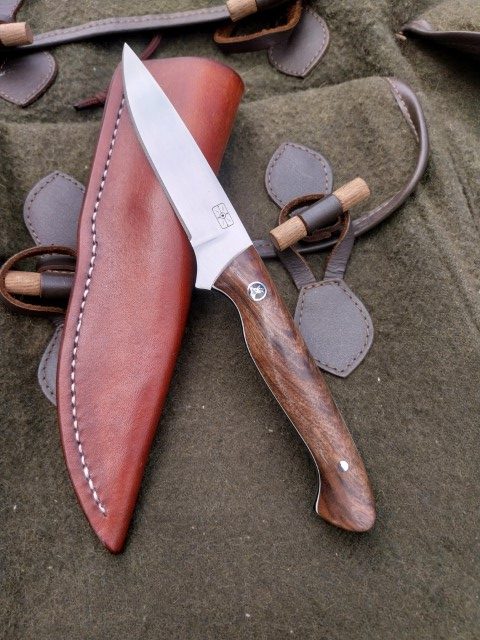
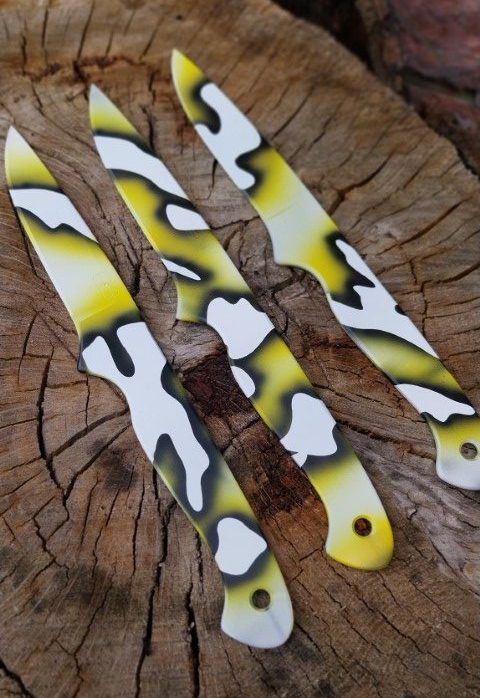
I don’t know if I do have a favourite part. The good thing is that you are not always on one job all the time. It’s the whole process – you move from cutting out the blade blanks, turning them in to finished blades. Making handles from all different types of material, attaching and shaping them. I do like to see a nice finished handle. But it’s then on to the sheath making with my preferred ones being made of leather.
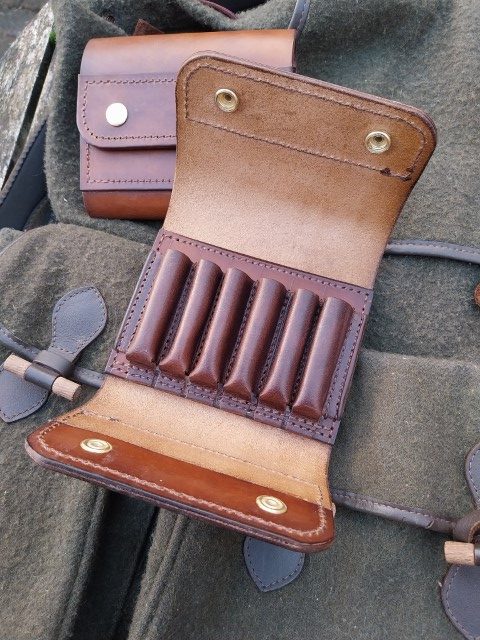
I do like leather working and I also make bullet pouches, belts and rifle slings. I have recently made wallets and I was also asked to make a different type of bullet pouch for a .470NE.
There is always a new skill to learn. I’ve just got myself some checkered tools. I’ll see how that goes.
What is your best-selling product and why do you think it’s so popular?
My best seller is probably my Roe Catcher. I would call it the best all rounder. This knife is made from 3mm steel. I make all my knives from stainless steel. Mainly Sandvik 14C28N. Although I do use other steels when asked.
The 3mm steel makes it a good sturdy blade and the length of about 100mm makes it a good length to bleed an animal but not too cumbersome.
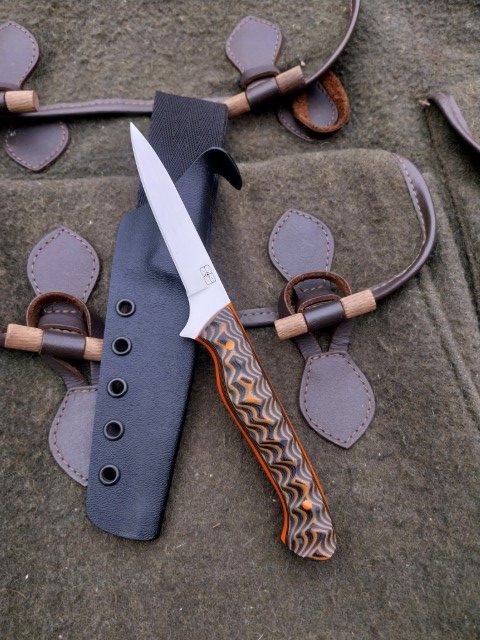
My other option would be my Muntjac Catcher. The Catcher part of the name relates to the handle shape. The Muntjac is made from 2.5mm steel and has a slim blade perfect for the smaller species of deer.
It seems like your craft is inspired by a love of rural life and hunting, and you share some of your adventures on the Danum Outdoors Youtube channel. Could you tell us a bit more about how you got into deer stalking and what the countryside means to you?
I’ve been involved with fieldsports since I was about 13. Before that I used to go fishing with my grandad. I don’t really come from a family that is into fieldsports but my grandad gave my brother an air rifle that he used to shoot rats with down on his allotment. My brother who is 4 years older than me wasn’t really bothered with it but I was. And there’s no better way to learn fieldcraft than to go out with an air rifle. When I was 13 I started to help out on a local small farm shoot trapping, feeding up and then beating through the season. When I was 16 I went to Lincoln agricultural college on a Gamekeeping course. As part of our course we not only got to work with pheasants and partridges but we also had a trout farm and a small deer heard. However, I didn’t start deer stalking until after I had left collage.
I did do my DSC 1 with one of my old college tutors. And my first stalking trip was up in Scotland on Dallas Moor around the year 2000.
I do a lot more stalking now than I did when I started. But I have always been doing something, be that out for rabbits or foxes. I go on a wild goose chase on the solway and I’m beating all the way through the season. I just love it. You get to see a lot more than most do when you are out. Especially when you are creeping about looking for deer or sat in a hide or a high seat. All your senses are on overdrive picking out the smallest of movements. And with the YouTube channel it allows you to share the experiences with others that may not be able to get out.
If anyone wanted to learn more about knifemaking, do you have any advice on where they should start?
Now I could say find yourself one of the weekend courses where you can make yourself a knife under guidance over the two days. However, I didn’t do that. I went to the font of all knowledge, YouTube. Apart from the magazine article and a couple of books, the information that people are willing to share on YouTube is really helpful.